Morven Whyte, Investment Manager
4 min read
Morven Whyte is an Investment Manager at Redmayne Bentley with more than 30 years’ experience in helping clients reach their financial goals. Here, she shares her thoughts on: why people invest; how to make the most of what you have; and the importance of keeping one eye on the next generation.
Returning from a three-month sabbatical has given me something that is often in short supply in our industry: perspective. Stepping away from screens, markets, and the daily rhythm of portfolio management provided an
opportunity to reflect not just on how we invest, but why we invest at all.
During that time, I came across Bill Perkins’ book
Die with Zero. It is a book which challenges many of the instincts ingrained in professional investors and clients alike. We are conditioned – often very successfully – to accumulate, preserve, and compound wealth over the long-term. Discipline, patience, and a long-term mindset are rightly celebrated. Perkins, however, poses a simple, uncomfortable question: what is the point of building wealth if you never meaningfully use it?
The Autopilot Problem
Many investors operate on what I would describe as a financial autopilot. They save diligently, invest prudently, and review performance periodically. Over time, portfolios grow – sometimes significantly. Yet, in many cases, the purpose of growth becomes blurred.
The default position is ‘carry on accumulating’. There is comfort in the familiar: reinvest the income, review asset allocation, stay invested, don’t deviate.
But autopilot has its drawbacks. It can quietly turn a purposeful financial plan into a perpetual accumulation exercise, with no clear end point.
The reality, of course, is that wealth unspent is not value realised. If anything, it risks becoming someone else’s opportunity to decide what happens next – be that beneficiaries without context or the taxman.
Reframing Wealth: From Numbers to Memories
One of the most powerful ideas in Die with Zero is the concept of ‘memory dividends’. Experiences – travel, shared time with family, meaningful life events – create value that compounds in a very different way to financial returns. They enrich our lives repeatedly through recollection and shared stories.
As investors, we often defer enjoyment in favour of future security. That is sensible to a point – but there comes a stage where additional capital adds little to security and could add significantly to quality of life.
Encouraging clients to think in these terms is not about abandoning prudence. It is about balance. It is about recognising when ‘more’ is no longer the objective, and when ‘better’ should take its place.
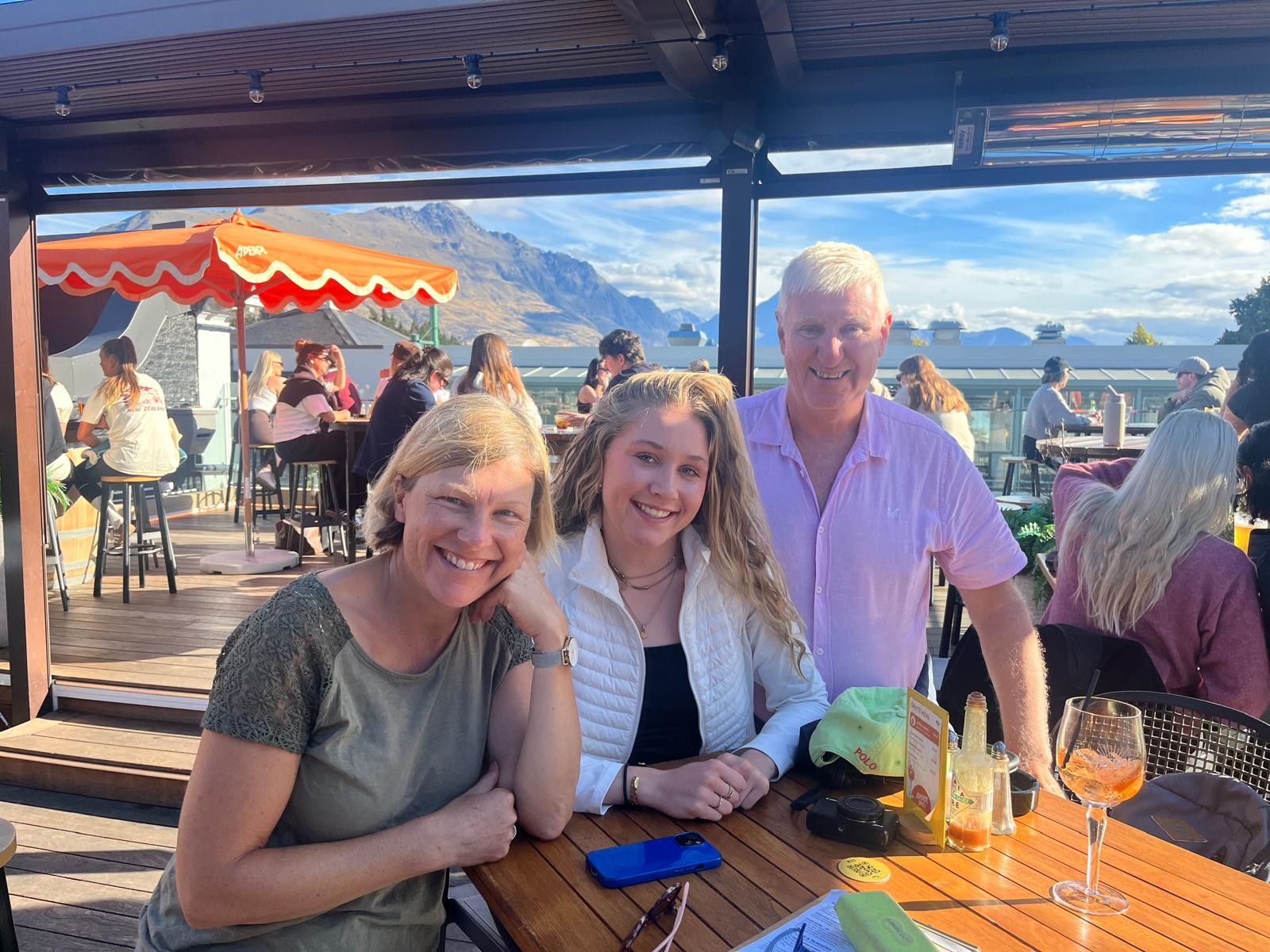 Morven with her husband Mack and youngest daughter Orla on the South Island of New Zealand during her sabbatical.
Giving While Living
Morven with her husband Mack and youngest daughter Orla on the South Island of New Zealand during her sabbatical.
Giving While Living
Traditionally, wealth transfer is something that happens at the end of life. But there is a growing case for doing more, earlier. Providing financial support to children or grandchildren at a stage in life when it can make a meaningful difference – be that helping them onto the property ladder, supporting education, or enabling life experiences – can be far more impactful than a larger inheritance received decades later.
In doing this, you can see the benefit of your wealth in action. There is a tangible satisfaction in witnessing how financial support can shape opportunities, rather than imagining it from afar.
The Role of Financial Planning
None of this is about impulsiveness or abandoning structure. In fact, quite the opposite. The confidence to spend, give, and enjoy wealth comes from knowing that doing so is sustainable.
This is where good financial planning becomes essential. A robust plan allows clients to understand what they truly need for their lifetime – factoring in longevity, inflation, income requirements, and contingencies. Once that baseline is clearly established, it becomes far easier to identify surplus capital and to deploy it with purpose.
It creates a framework for prioritisation: when to spend, when to gift, and when to retain capital for security. This is not about reaching zero necessarily, but about avoiding the opposite outcome – finishing with significantly more than intended, having missed opportunities along the way.
A Change in Conversation
Having returned to working with clients, I find myself more focused on these broader questions.
Of course, investment performance, asset allocation, and risk management remain fundamental. They always will be. But they are means to an end, not the end itself.
The more important conversation is about outcomes:
• What does a well-lived life look like for you?
• What experiences matter most?
• When would financial support have the greatest impact on your family?
Final Thoughts
The discipline to build wealth is admirable and, for many, hard-earned. But there is a risk that, without reflection, that discipline becomes inertia.
Switching off autopilot, even briefly, can be transformative. It allows us to reconnect financial decisions with real-life outcomes.
My sabbatical has reinforced a simple but powerful idea: money is at its most valuable when it is used with intention.
Not just preserved, not just grown, but actively deployed to enhance life – our own and that of those around us. For clients who recognise that they may have ‘enough’, the opportunity is significant. With the right planning and guidance, it is entirely possible to maximise both financial security and life experience.
After all, the ultimate measure of success is not the number on a final statement – it is what that number enabled along the way.
If you want to talk about how we could help you with your financial goals, please do reach out to our Investment Management team on:
0344 259 0001 or
info@redmayne.co.uk
Alternatively, you can speak to one of our experienced Financial Planners by calling
0344 259 0002 or emailing
financialplanning@redmayne.co.uk.
Please note that this article is for information only and does not constitute a recommendation or financial advice. The value of investments and any income derived from them may go down as well as up and you could get back less than you invested. Please note that tax treatment depends on the specific circumstances of each individual and may be subject to change in the future. The Financial Conduct Authority does not regulate tax or estate planning.